


Aethelred / Ethelred I

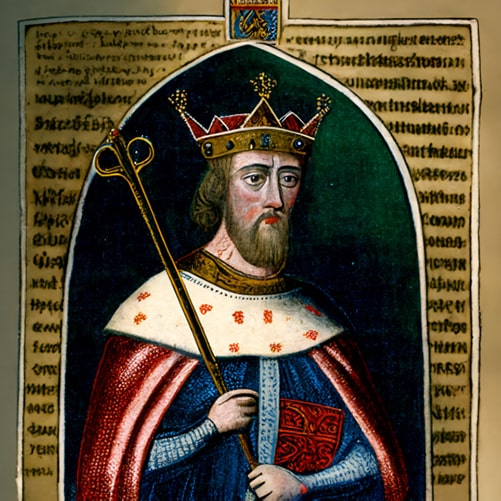
Aethelred / Ethelred I
866 – 871 A.D
Delve into the saga of King Aethelred I of Wessex, whose leadership was a fierce stand against Viking aggression. His reign, marked by both heroism and sorrow, paints a vivid picture of early medieval England's tumultuous history.
Early Life and Background
Aethelred I, the third son of King Aethelwulf of Wessex, was born into a period of escalating Viking aggression. Growing up in the shadow of his father’s and elder brothers’ reigns, he was groomed for leadership in a kingdom under siege. His early years were marked by the growing threat of Norse invaders, who had begun to ravage the English coastline and countryside with increasing ferocity.
Ascension to Power
Aethelred ascended to the throne in 865, following the death of his brother Aethelbert. His rise to power came at a critical juncture in English history, as Viking forces were intensifying their raids, leading to the establishment of the Great Heathen Army, a formidable Norse force that would challenge the very existence of the Anglo-Saxon kingdoms.
Rule and Reign
Aethelred’s reign was dominated by his struggle against the Vikings. In 867, he faced a significant challenge when the Great Heathen Army seized York, marking a major shift in the Viking strategy from raiding to conquest. Aethelred, in response, mustered his forces, showcasing his determination and military acumen.
Challenges and Conflicts
The defining moments of Aethelred’s reign were his battles against the Vikings. The Battle of Ashdown in 871, where Aethelred and his brother Alfred (later known as Alfred the Great) achieved a significant victory, was a testament to his leadership and bravery. Despite this victory, the relentless Viking attacks continued, challenging Aethelred’s resolve and resources.
Diplomatic and Cultural Contributions
Amidst the turmoil of his military campaigns, Aethelred’s reign also saw efforts to maintain the cultural and religious identity of his kingdom. He continued to support the Church, an institution that was crucial in fostering a sense of unity and resilience among his people during these trying times.
Legacy and Succession
Aethelred’s legacy is intrinsically linked to his valiant stand against the Viking invaders. His efforts laid the groundwork for the future successes of his brother, Alfred the Great. Aethelred’s death in 871, after a battle with the Vikings, led to Alfred’s ascension to the throne, a turning point in the history of Wessex and England.
Personal Life
While details of Aethelred’s personal life are sparse, his reign is emblematic of a ruler who prioritized the defense of his kingdom over personal pursuits. His leadership during one of the most challenging periods in Anglo-Saxon history underscores his dedication to his duties as king.
In Aethelred’s biography, we see a king whose reign was a critical chapter in the saga of Anglo-Saxon England’s resistance against Viking invasions. His story is not just one of battles and warfare but also of steadfast leadership and commitment to the preservation of his kingdom’s identity and independence in the face of overwhelming odds.


