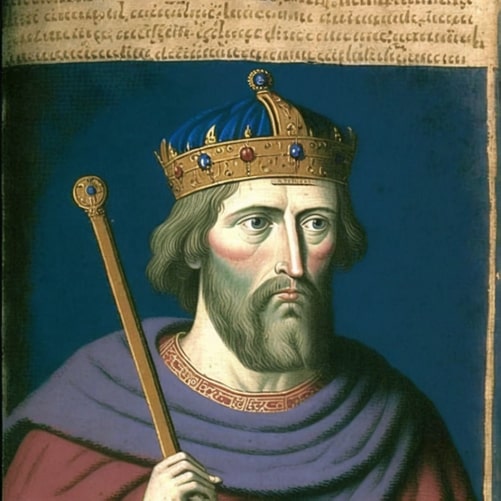
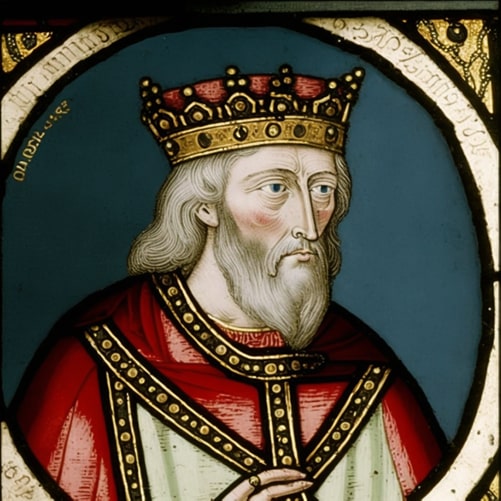
Harold Harefoot


Harold Harefoot
1035 - 1040 A.D
Uncover the story of King Harold Harefoot, in a period rife with dynastic challenges following Cnut's reign. His governance, navigating a kingdom at the crossroads of Norse and Anglo-Saxon cultures, and his agility as a leader, earned him the name 'Harefoot
Early Life and Background
Born around 1016, Harold Harefoot was the son of King Cnut the Great and his first wife, Ælfgifu of Northampton. Harold’s early life was marked by his father’s expansive rule over the North Sea Empire. The dynamics of this period, particularly the division of Cnut’s territories among his sons, set the backdrop for Harold’s eventual ascent to the English throne.
Ascension to Power
Harold’s path to kingship began after the death of his father in 1035. Initially, Harold became the regent of England due to the absence of his half-brother Harthacnut, who was in Denmark. The kingdom, divided over its loyalty between Harold and Harthacnut, saw Harold eventually seize full kingship by 1037, amidst ongoing dynastic disputes.
Rule and Reign
Harold Harefoot’s reign, lasting from 1037 to 1040, was marked by his efforts to consolidate power and maintain stability in a kingdom divided between loyalties to the house of Cnut and the native Anglo-Saxon lineage. His rule was generally peaceful, yet it was characterized by the political maneuvering necessary to keep his position secure against potential threats, including those from his own family.
Challenges and Conflicts
One of Harold’s main challenges was establishing his legitimacy as king in the face of opposition from supporters of his half-brother Harthacnut and the claims of the Anglo-Saxon prince Edward (later Edward the Confessor). His reign was a delicate balancing act of managing these internal tensions while maintaining the order established by his father.
Diplomatic and Cultural Contributions
Harold’s reign, primarily focused on internal politics, offered little in the way of significant diplomatic or cultural advancements. His rule was a continuation of the Norse influence in England but lacked the broader impact of his father’s reign on the cultural and religious landscape of the kingdom.
Legacy and Succession
Harold Harefoot’s legacy is intrinsically tied to the transitional nature of his reign – a period bridging the powerful rule of his father and the eventual return of the native Anglo-Saxon kingship. His death in 1040 led to the ascension of his half-brother Harthacnut and later Edward the Confessor, marking the end of direct Norse rule in England.
Personal Life
Little is known about the personal life of Harold Harefoot, as historical accounts of his reign are sparse and often overshadowed by the more significant reigns of his father and successors. His nickname, ‘Harefoot’, is one of the few personal attributes recorded, hinting at a king known for physical prowess.
King Harold Harefoot’s biography, though brief and less documented than those of other monarchs, provides a crucial insight into the complexities of early 11th-century English monarchy. His reign was a key period in the ongoing saga of England’s transition from Norse to native rule, encapsulating the challenges of succession and the struggle for power in a kingdom at the crossroads of its historical identity.