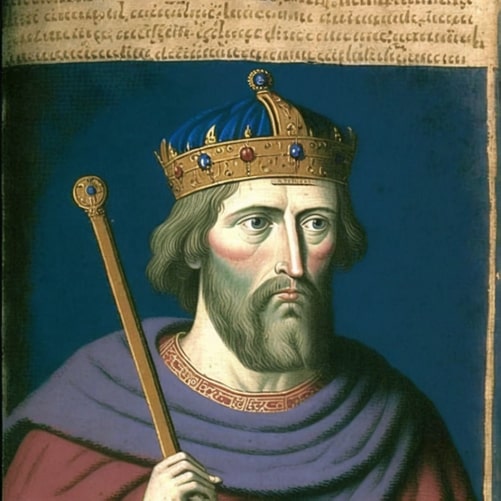
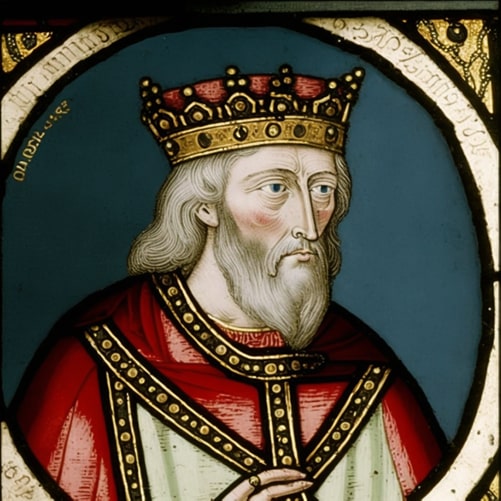
Edward the Confessor


Edward the Confessor
1042 - 1066 A.D
Journey through the era of Edward the Confessor, a crucial period before the Norman Conquest. His reign, renowned for religious devotion and political maneuvering, represents a key chapter in medieval England, bridging Viking influence and Norman rule.
Early Life and Background
Born around 1003 to King Æthelred the Unready and Emma of Normandy, Edward spent much of his early life in exile in Normandy following the Danish conquest of England. This exile significantly influenced his upbringing, imbuing him with Norman culture and perspectives, which later played a role in his kingship and the events leading to the Norman Conquest of England.
Ascension to Power
Edward returned to England in 1041 and ascended the throne in 1042 after the death of his half-brother Harthacnut. His succession marked the restoration of the Anglo-Saxon royal line, albeit heavily influenced by his Norman upbringing. His ascension was largely unopposed, signaling a desire for stability and continuity after years of Viking rule.
Rule and Reign
Edward’s reign was characterized by his deep religiosity and efforts to reform the Church. He maintained peace in England but faced challenges in managing the powerful earls, particularly Godwin, Earl of Wessex, and his sons. His reign was marked by relative internal stability, yet marred by the growing influence of the Godwin family, which created tension and power struggles within the court.
Challenges and Conflicts
One of Edward’s primary challenges was balancing the competing interests of powerful nobles. His relationship with Earl Godwin and later with Godwin’s son Harold was complex, oscillating between cooperation and conflict. Edward also had to navigate the expectations of his Norman allies, who had hopes of influence in England, setting the stage for future conflicts.
Diplomatic and Cultural Contributions
Edward is credited with significant contributions to the English Church, including the foundation of Westminster Abbey, a testament to his piety and legacy. His reign also saw the continuation of legal and administrative systems that laid the groundwork for later English governance.
Legacy and Succession
Edward’s legacy is a blend of sanctity and controversy. He was canonized as a saint, and his piety was widely celebrated. However, his lack of a clear successor led to a succession crisis upon his death in 1066. His reputed promise of the throne to William of Normandy and the competing claim of Harold Godwinson culminated in the Norman Conquest, a turning point in English history.
Personal Life
Edward’s marriage to Edith, the daughter of Earl Godwin, was a political union that produced no heirs. His personal piety and preference for Norman advisors over English nobles created a rift within his court, influencing the political landscape of his reign.
King Edward the Confessor’s biography reveals a monarch whose reign was marked by religious devotion, political complexity, and the undercurrents of change that would lead to one of the most significant events in English history. His rule bridged the Anglo-Saxon period and the Norman influence, making him a key figure in understanding the transition of England from the medieval era to the precipice of significant transformation.