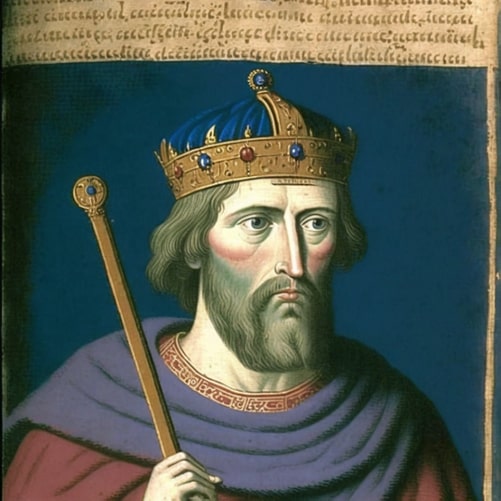
Aethelwulf / Ethelwulf

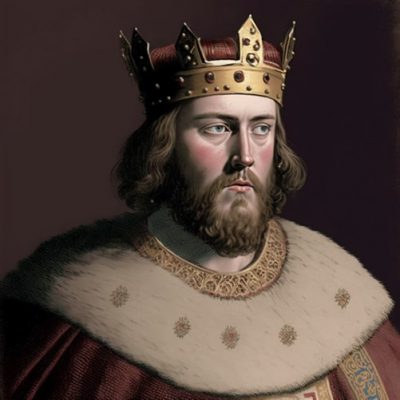
Aethelwulf / Ethelwulf
839 - 858 A.D
Journey through King Aethelwulf's era, a crucial time in England's history defined by Viking raids and political strife. His reign, a blend of warfare and statesmanship, highlights the challenges and triumphs of 9th-century rulership
Early Life and Background
Aethelwulf, the son of King Egbert, was born into a period of significant transformation in Anglo-Saxon England. His early life, though not extensively documented, was set against the backdrop of his father’s expansive reign, which had significantly altered the political landscape of the region.
Ascension to Power
Inheriting the throne in 839, Aethelwulf stepped into a role that was both challenging and promising. His father had left behind a powerful Wessex, but the constant threat of Viking invasions presented a formidable challenge to his rule.
Rule and Reign
Aethelwulf’s reign was defined by his efforts to defend his kingdom against the Vikings. He engaged in several battles, notably the Battle of Carhampton in 843, though with mixed success. His reign was also characterized by his piety and support for the Church, which played a significant role in his governance.
Challenges and Conflicts
The Viking threat was the predominant challenge of Aethelwulf’s reign. These invasions tested his military capability and strategic acumen. Additionally, internal disputes, especially regarding succession and the division of his kingdom among his sons, marked the later years of his rule.
Diplomatic and Cultural Contributions
Aethelwulf is noted for his pilgrimage to Rome in 855, a significant act of piety that underscored his devotion to Christianity. This journey also had diplomatic undertones, as it strengthened ties with the papacy and other Christian rulers. Culturally, his reign continued the support of religious institutions, aiding in the preservation and promotion of learning and ecclesiastical art.
Legacy and Succession
Aethelwulf’s legacy is intricately tied to his efforts in defending Wessex against Viking incursions and his deep religious commitment. His succession plan, which involved dividing his kingdom among his sons, had lasting implications for the future of Wessex. His son Alfred, who would later be known as Alfred the Great, inherited a kingdom that was militarily and spiritually fortified.
Personal Life
Aethelwulf’s personal life was marked by his marriage to Osburh, the mother of his children, including Alfred the Great. His later marriage to Judith, the daughter of the Frankish King Charles the Bald, was a strategic alliance that further illustrates the importance of diplomatic marriages in medieval royalty.
Through this biography, Aethelwulf emerges not just as a warrior king battling Viking invaders but also as a devout Christian ruler who navigated the complex political and social challenges of his time. His reign, though overshadowed by the achievements of his son Alfred, was crucial in maintaining the stability and continuity of Wessex during a period of great turmoil and change.