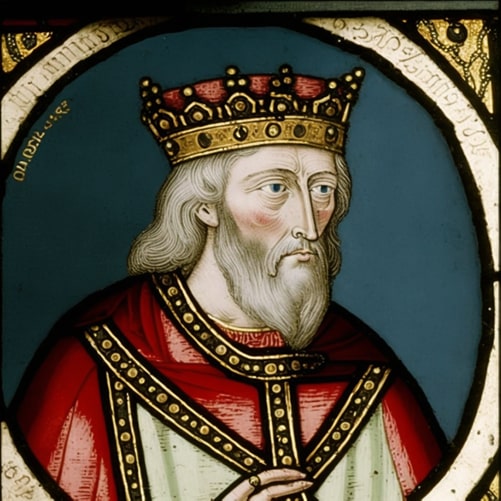
Eadred / Edred


Eadred / Edred
946 – 955 A.D
Uncover the era of King Eadred, a ruler who skillfully countered Viking challenges and internal conflicts. Following his brother Edmund I, his decisive leadership was instrumental in the development of a stable, unified English kingdom.
Early Life and Background
Eadred, born around 923, was a son of King Edward the Elder and a younger brother to both Athelstan and Edmund I. Raised in a period of significant political and military achievements by his family, Eadred’s upbringing was steeped in the burgeoning traditions of the West Saxon court, which were heavily influenced by the victories and challenges of his predecessors in establishing a unified English kingdom.
Ascension to Power
Eadred ascended to the throne in 946 following the untimely death of his brother, Edmund I. His succession occurred amidst a period of ongoing strife and instability, particularly in the north of England, where the influence of the Vikings and local rulers remained strong. Eadred’s rise to power thus came with the immediate challenge of asserting his authority over these contentious regions.
Rule and Reign
Eadred’s reign, from 946 to 955, was marked by his efforts to strengthen and maintain the unity of the English kingdom. He faced considerable challenges in securing his rule over Northumbria, a region that had fluctuated between English and Viking control. Eadred’s tenacity in dealing with rebellions and revolts, particularly the challenges posed by the Norse rulers Erik Bloodaxe and Olaf Sihtricson, was a defining aspect of his kingship.
Challenges and Conflicts
Eadred’s rule was characterized by ongoing conflicts with the Viking kingdoms in Northumbria. His determination to bring this region firmly under English control led to several military campaigns. The intermittent rebellions and power struggles in Northumbria tested Eadred’s resolve and highlighted the fragile nature of the authority and loyalty in the region.
Diplomatic and Cultural Contributions
Despite the military focus of his reign, Eadred also made significant contributions to the religious and cultural life of his kingdom. He continued the tradition of fostering the Church, which played a crucial role in consolidating royal authority and promoting a sense of unity across the kingdom. Eadred’s support of religious institutions also underscored his commitment to the cultural and spiritual welfare of his realm.
Legacy and Succession
Eadred’s legacy is predominantly defined by his successful efforts to maintain the cohesion of the English kingdom amidst external threats and internal dissensions. His reign solidified the foundations laid by his predecessors for a unified English monarchy. Upon his death in 955, Eadred was succeeded by his nephew Eadwig, continuing the lineage of the House of Wessex.
Personal Life
Eadred’s personal life, particularly his decision not to marry, was unusual for kings of the time. Chronic health issues, which affected him throughout his life and reign, may have influenced this aspect of his personal life. Despite these challenges, Eadred’s dedication to his role as king and protector of the realm remained unwavering.
King Eadred’s biography portrays a ruler who, though reigning for a relatively short period, played a vital role in the early history of a unified England. His reign was a period of consolidation, marked by both conflict and commitment to the unity and stability of the kingdom he governed. His efforts in maintaining the gains of his predecessors and navigating the turbulent political landscape of the time were crucial in the ongoing process of nation-building in medieval England.