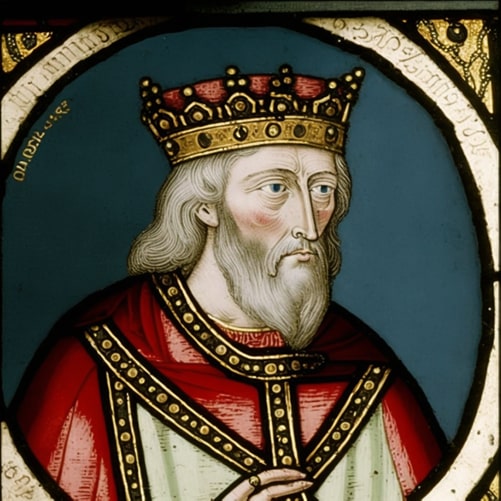
Edmund I

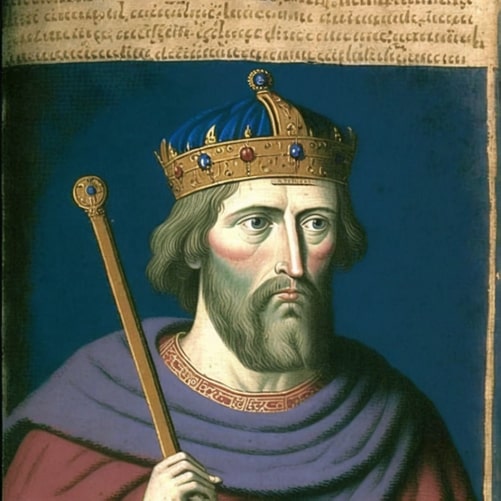
Edmund I
939 – 946 A.D
Discover King Edmund I's dynamic rule, as he continued the formidable task of uniting England after Athelstan. His brief reign, filled with critical alliances and actions, significantly influenced the early formation of the English nation.
Early Life and Background
Edmund I, born around 921, was the son of Edward the Elder and the younger half-brother of Athelstan. His early life was overshadowed by the monumental achievements of his predecessors, growing up in a time when the foundations of a unified English kingdom were being laid. Edmund’s upbringing in the court of Athelstan, a hub of learning and military prowess, would have significantly influenced his later rule.
Ascension to Power
Edmund ascended to the throne in 939 at the age of 18, following the death of his brother Athelstan. His succession marked the continuation of the unification process begun by his predecessors. Edmund inherited a kingdom that was still in the process of solidifying its boundaries and internal administration, a task he would have to navigate with care and skill.
Rule and Reign
Edmund’s reign, from 939 to 946, was a period of consolidation and challenge. Early in his reign, he faced setbacks, including the loss of control over Northumbria to the Vikings. However, Edmund demonstrated resilience and strategic acumen by recapturing the territory later in his reign. He also extended his influence into Strathclyde and Cumbria, fortifying the kingdom’s northern borders and establishing alliances that would have lasting implications for the region.
Challenges and Conflicts
Edmund’s reign was beset by external threats, particularly from the Vikings. The early loss of Northumbria was a significant challenge, but Edmund’s subsequent military campaigns showcased his ability to recover and strengthen his position. He also faced internal challenges, including maintaining the loyalty of his ealdormen and managing the kingdom’s diverse regions.
Diplomatic and Cultural Contributions
In addition to his military endeavors, Edmund was known for his diplomatic efforts. He forged strategic alliances through marriages, most notably arranging the marriage of his sister to the Holy Roman Emperor Otto I. Edmund also continued the cultural patronage initiated by his forebears, promoting the growth of monasticism and the Christian Church, which played a key role in the cultural and social cohesion of his kingdom.
Legacy and Succession
Edmund’s legacy is characterized by his role in maintaining the unity and territorial integrity of the English kingdom during a period of significant external threats. His efforts in reasserting control over Northumbria and extending influence into neighboring regions were crucial in the ongoing process of nation-building. Edmund’s untimely death in 946, due to an assassination, led to the succession of his brother Eadred, who continued the task of consolidating the kingdom.
Personal Life
Details of Edmund’s personal life are sparse, but he is known to have had two sons, Eadwig and Edgar, who would both go on to become kings of England. His commitment to the stability and prosperity of his kingdom is evident in his actions and policies throughout his reign.
King Edmund I’s biography reveals a ruler who, while often overshadowed by his more famous brother Athelstan, played a pivotal role in the early years of a unified English kingdom. His contributions in diplomacy, warfare, and cultural development were instrumental in maintaining the achievements of his predecessors and setting the stage for the continued growth and stability of England.