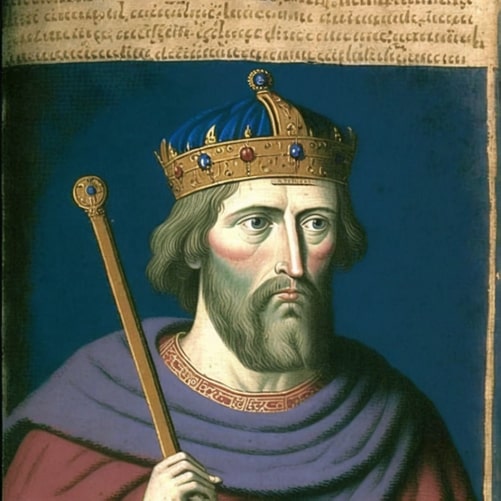
Edward the Elder

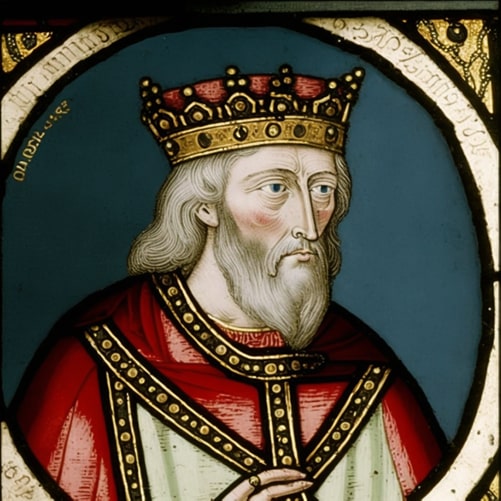
Edward the Elder
899 – 924 A.D
Explore the reign of King Edward the Elder, who skillfully continued his father Alfred the Great's work in unifying and defending Anglo-Saxon England. His strategic and military expertise significantly shaped medieval England's destiny, expanding Wessex's influence and paving the way for a united nation.
Early Life and Background
Born around 874, Edward the Elder was the eldest son of Alfred the Great, King of Wessex. His upbringing was in an era marked by his father’s monumental struggle against the Vikings, instilling in Edward a deep understanding of the challenges and responsibilities of kingship in a period of tumultuous warfare and political upheaval.
Ascension to Power
Edward ascended to the throne in 899, following the death of his illustrious father. His rise to power came at a critical time in English history, with the Viking threat still looming large and the task of continuing his father’s legacy of unifying the Anglo-Saxon kingdoms resting heavily on his shoulders.
Rule and Reign
Edward’s reign, lasting from 899 to 924, was characterized by relentless military campaigns against the Vikings and the expansion of Wessex’s influence. One of his most significant achievements was the fortification of towns and cities, a strategy inherited from his father, which played a crucial role in defending against Viking raids. Edward also focused on annexing neighbouring kingdoms, including East Anglia and Mercia, furthering the process of unifying the English territories.
Challenges and Conflicts
Edward faced numerous challenges during his reign, most notably the constant threat of Viking invasions. He engaged in several battles and sieges, demonstrating his military prowess and strategic mind. His efforts to annex other Anglo-Saxon kingdoms were met with resistance, both from the Vikings and rival English lords. However, his successes in these endeavours significantly weakened Viking power in England and expanded his own kingdom’s influence.
Diplomatic and Cultural Contributions
Edward continued his father’s work in strengthening the cultural and administrative structures of the kingdom. He fostered the growth of towns and trade, contributing to the economic development of his realm. His reign saw the continued promotion of learning and the arts, maintaining the intellectual legacy of Alfred the Great.
Legacy and Succession
Edward’s legacy lies in his role as a consolidator of the gains made by his father and as an expander of Wessex’s territory. He set the stage for the eventual unification of England under his son, Æthelstan. Edward’s death in 924 led to a brief period of uncertainty regarding succession, but his influence and achievements endured, solidifying the foundation for a united English kingdom.
Personal Life
While details of Edward’s personal life are less documented than his public endeavors, he is known to have had several children, including his successor Æthelstan. His marriages and alliances through his daughters were strategically significant, forging ties with various nobles and consolidating his rule.
King Edward the Elder’s biography reveals a ruler who, while less celebrated than his father, played a fundamental role in the formation of a united English nation. His military successes, administrative reforms, and expansionist policies were crucial in transforming the landscape of Anglo-Saxon England, setting the groundwork for the eventual emergence of a unified English state.