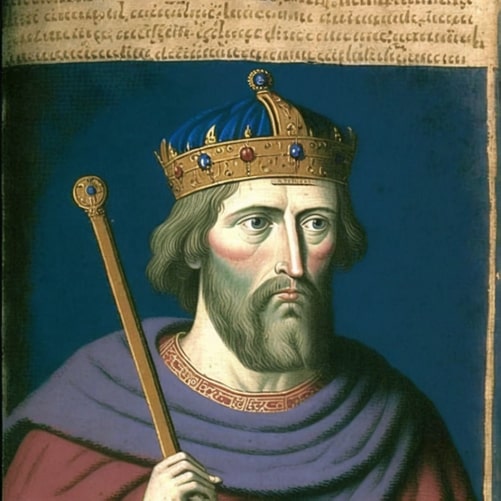
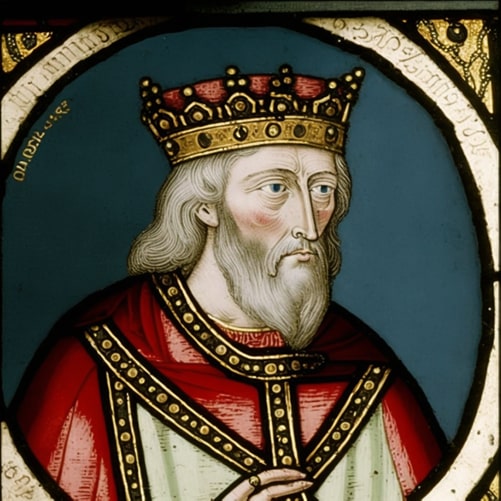
Edmund Ironside


Edmund Ironside
1016 A.D
Discover the era of King Edmund Ironside, a time of intense conflict and resilience. In 1016, succeeding his father Aethelred, Edmund's rule was marked by his relentless struggle against Cnut the Great's invasion, highlighting his legendary courage and earning him the name 'Ironside.
Early Life and Background
Born around 989, Edmund Ironside was the son of King Aethelred the Unready and his first wife, Ælfgifu. Growing up during his father’s troubled reign, Edmund witnessed the persistent Viking threats that destabilized England. This environment likely shaped his martial prowess and determination to defend his kingdom.
Ascension to Power
Edmund ascended to the throne in April 1016 following the death of his father, amidst one of the most challenging periods in English history. His rise to kingship occurred as England faced the escalating threat of Danish invasion under Cnut the Great, setting the stage for a reign consumed by warfare and defense.
Rule and Reign
Edmund’s reign, though brief, was marked by a series of intense military campaigns against the Danish forces. His determination to resist Danish rule was exemplified in several battles, most notably the Battles of Brentford and Assandun. His relentless efforts to defend his kingdom earned him the moniker ‘Ironside’.
Challenges and Conflicts
The primary challenge of Edmund’s reign was the Danish invasion led by Cnut. Facing a formidable enemy and internal division within his kingdom, Edmund’s reign was a constant struggle for survival. His military campaigns, though initially successful in some engagements, ultimately could not halt the Danish advance.
Diplomatic and Cultural Contributions
The circumstances of Edmund’s reign left little opportunity for diplomatic or cultural advancements. His primary focus was on the military defence of his kingdom. However, his resistance against the Danes did contribute to preserving the identity and independence of England, even in the face of overwhelming odds.
Legacy and Succession
Edmund Ironside’s legacy is defined by his fierce resistance against Danish conquest. His death in November 1016, under mysterious circumstances, led to the partitioning of the kingdom between himself and Cnut, with Cnut taking control soon after Edmund’s death. Edmund’s fight against the Danes, however, remained a symbol of English resilience and valor.
Personal Life
Details of Edmund’s personal life are limited. He was married to Ealdgyth, with whom he had two sons, Edward the Exile and Edmund. His personal life, like his reign, was largely overshadowed by the exigencies of war and the defense of his kingdom.
King Edmund Ironside’s biography portrays a ruler whose time on the throne was a critical moment in the history of medieval England. His reign was characterized by the struggle to maintain English sovereignty in the face of a formidable Danish adversary. Edmund’s courage and determination in the face of such challenges solid.